When a noxious odor at Francis Howell North made staff and students sick, FHEA members built a reporting network, documented every incident, and pushed until the district acted.
Francine Hill does not love heights. But on Good Friday 2025, the Francis Howell Education Association president was on the roof of Francis Howell North High School in St. Peters, following engineers through smoke bomb tests and making sure someone from the union saw exactly what the district saw. She was not up there alone. Building rep Kim Coil was right beside her.
That is what collective action looks like when the health and safety of educators and students is on the line.
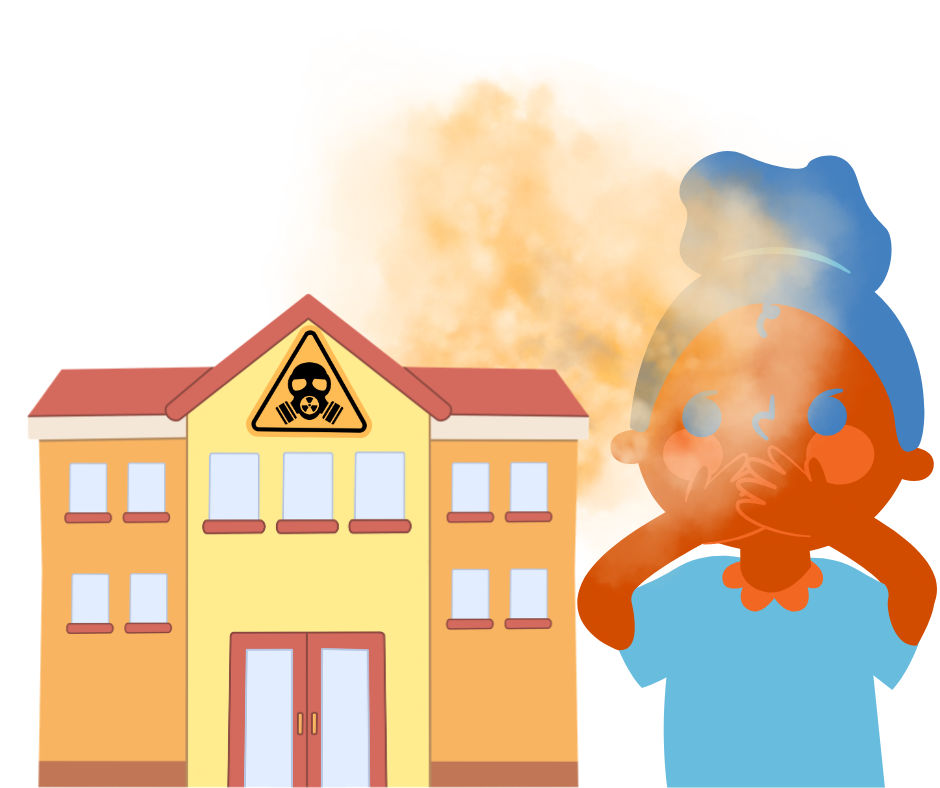
The problem had started months earlier during the 2024-25 school year. A sewage-like smell began appearing in parts of the 400,000-square-foot building, which had opened in July 2024. At first, it was isolated. Then it spread, grew stronger, and started making people sick. "It was really, really strong," said senior Ellenna Forbes, describing the smell near an air vent in the school's library. "It was almost nauseating". Educators reported nausea, headaches, and migraines. Students were affected too. Stephanie Pingel, a parent of a Francis Howell student, described what the disruption looked like for families: "My daughter is taking Foods, and they can't use the classroom kitchen right now due to the odor. It's been very disappointing for her considering it's a beautiful and brand-new class kitchen." At times, entire classrooms had to be relocated. By June 2025, the district pulled summer school programs out of the building entirely.
Members Built the Record
The record was substantial. When FHEA filed sunshine requests for all district communications related to the odor, the documents totaled more than 700 pages. KSDK and KMOV reported on the situation in April 2025, bringing wider attention to the fact that at least three staff members had filed workers' compensation claims. The St. Louis Post-Dispatch published in-depth reporting on the health impacts to students and staff.
Those workers' comp claims were initially denied after district air quality tests showed no toxic substances. The affected educators had to use their own sick days for time missed due to symptoms caused by the building. FHEA members stood behind their colleagues, and the local pushed back, advocating directly with the district.
Sunshine Request Result
More than 700 pages documenting incidents of odor and noxious gas—demonstrating a thorough and undeniable record.

The Result: Every one of those sick days was restored.
One educator was not as fortunate. Doctors diagnosed her with permanent neuropathy caused by toxic substance exposure, and told her she could never return to the building. FHEA worked with the district to secure her a transfer to another school. Of the other two severely affected educators, one retired and one left the district.
Stronger Because They Acted Together
None of this moved because one person acted alone. It moved because dozens of FHEA members reported every incident, building reps kept the information flowing, and local leaders refused to let the issue fade. FHEA drew on the resources of Tri-County Labor, who provided analysis that helped sharpen the local's advocacy.
A Case Engineering report found that air intakes on the school's roof were pulling sewer gases back into the building through the ductwork. A July 2025 board meeting confirmed municipal sewer pressure as the most likely source of the intermittent odors. A temporary pressure-relief fix is being installed this summer, with a permanent solution to follow.
FHEA is already preparing current and new building reps to maintain that same level of advocacy, ensuring the next generation of leaders is ready to hold the line for educators and students at Francis Howell North.
"This is what our union does," Hill said. "We organize, we build the record, we stand together, and we do not stop until our educators and students are safe."